



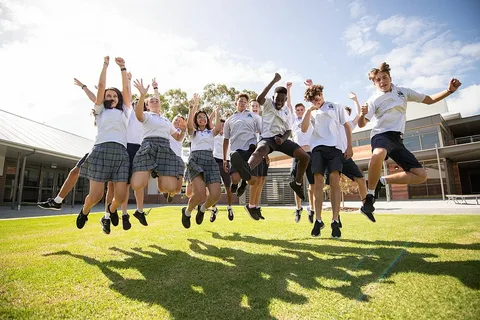
In an era where education is increasingly digital and assessment-driven, school camps remain one of the most powerful tools for holistic student development.
While classroom learning builds academic knowledge, outdoor education builds character, resilience, and social capability—skills that are just as critical for long-term success.
Research in outdoor education consistently shows strong benefits. For example, studies in Australia have found that participation in structured outdoor learning programs can improve students’ teamwork and communication skills by up to 70%, particularly when programs involve challenge-based group activities and reflective learning.
In addition, a 2023 national survey of educators reported that over 80% of teachers observed improved student engagement and confidence after attending school camps.
These outcomes highlight why well-designed camps are no longer optional extras—they are essential components of modern education.
Building Confidence Through Real-World Challenges
One of the most noticeable impacts of school camps is the development of confidence. Students are placed in unfamiliar environments, away from their usual routines and support systems, and are encouraged to take on manageable challenges.
These may include:
- Navigating bush trails or outdoor environments
- Participating in group problem-solving activities
- Trying adventure-based learning such as ropes courses or kayaking
- Taking responsibility for personal organisation and teamwork
These experiences teach students that confidence is not something you are born with—it is built through repeated exposure to new and sometimes uncomfortable situations. Over time, students begin to trust their own abilities more and rely less on constant instruction.
Strengthening Social Skills and Teamwork
School camps are also one of the most effective environments for improving interpersonal skills. Unlike classroom settings where interactions are structured and limited, camps require continuous collaboration.
Students must:
- Share accommodation and responsibilities
- Work together to complete challenges
- Resolve conflicts in real time
- Support peers through physical or emotional challenges
This constant interaction naturally builds empathy, patience, and communication skills. Teachers often notice that quieter students become more vocal in group settings, while dominant personalities learn to listen and cooperate more effectively.
The Role of Outdoor Education in Academic Performance
While camps are often seen as purely recreational, their impact on academic performance should not be underestimated. Improved focus, resilience, and motivation gained from outdoor education often translate back into the classroom.
Key benefits include:
- Increased engagement in classroom discussions
- Better problem-solving and critical thinking skills
- Improved attendance and reduced disengagement
- Stronger ability to manage stress during assessments
A growing body of educational research suggests that students who participate in structured outdoor learning programs tend to show sustained improvements in motivation and learning attitudes for weeks or even months after returning to school.
Developing Leadership and Independence
School camps also provide a natural environment for leadership development. Without the usual hierarchy of the classroom, students are given opportunities to step into leadership roles in informal but meaningful ways.
These opportunities may involve:
- Leading a group activity or navigation task
- Organising shared responsibilities within accommodation groups
- Supporting younger or less confident peers
- Making group decisions under guidance
At the same time, students develop independence. Being responsible for personal belongings, time management, and self-care in a supervised outdoor setting builds life skills that cannot be fully replicated in a classroom.
Choosing the Right School Camp Experience
Not all school camps deliver the same educational value. The most effective programs are those that balance adventure, safety, and structured learning outcomes. Schools should look for providers that offer:
- Curriculum-aligned outdoor education programs
- Experienced and qualified instructors
- Age-appropriate physical and mental challenges
- Strong safety and risk management systems
- Opportunities for reflection and learning consolidation
A well-structured camp ensures that every activity contributes to specific educational outcomes, rather than simply being recreational.
For schools seeking high-quality outdoor education experiences in New South Wales, programs such as school camps sydney provide structured, curriculum-linked adventures designed to maximise both learning and personal growth.
The Lasting Impact of School Camps
The true value of school camps is not always immediately visible when students return to school. Instead, it appears over time—in improved confidence, stronger friendships, better behaviour, and a greater willingness to engage in learning challenges.
Students often reflect on camps as some of the most memorable and transformative experiences of their schooling years. These shared experiences also strengthen school culture, creating a sense of community that extends beyond the classroom.
Final Thoughts
School camps are far more than a break from routine—they are an essential part of developing well-rounded, capable young people.
By combining physical challenge, social interaction, and real-world problem-solving, they help students grow in ways that traditional classroom learning alone cannot achieve.
As education continues to evolve, outdoor learning will remain a cornerstone of student development in Australia, preparing young people not just for exams, but for life beyond school.