



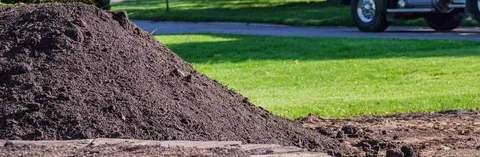
Ground materials often look similar at first glance, yet their purpose and performance vary greatly once applied. Choosing between fill dirt and topsoil affects stability, drainage, plant health, and long-term maintenance across residential and commercial projects. Understanding how each type functions helps buyers make informed decisions when sourcing dirt for sale or arranging dirt delivery near me.
Fill Dirt Used for Structural Support in Grading Projects
Fill dirt serves as a base material designed to support weight and maintain grade. It is commonly used beneath foundations, driveways, retaining walls, and roadbeds where structural integrity matters more than appearance. Builders rely on fill dirt because it packs tightly, resists movement, and maintains consistent elevation after compaction.
Grading projects often require large volumes, making efficient rock and dirt delivery an important factor. Fill dirt sourced for grading typically contains clay, sand, and small stones that lock together under pressure. This composition allows it to hold shape over time, even under repeated loads from vehicles or structures.
Topsoil Chosen for Planting Beds and Nutrient-rich Growth
Topsoil is selected for surface applications where vegetation is expected to thrive. It contains organic matter, microorganisms, and fine particles that support plant roots and encourage healthy growth. Landscapers and homeowners often seek soil for sale specifically labeled as topsoil for gardens, lawns, and planting beds.
Unlike fill dirt, topsoil is not intended to bear structural loads. Its loose texture allows air and water to circulate, which benefits plants but makes it unsuitable for foundational work. Proper placement ensures it stays where it belongs, typically as the final layer after grading is complete.
Fill Dirt Free of Organics to Prevent Settling Issues
One defining trait of fill dirt is its lack of organic material. Roots, leaves, and decomposing matter break down over time, which can lead to voids and surface collapse. Fill dirt avoids these risks by excluding materials that decay or compress unevenly.
This quality makes fill dirt ideal for long-term applications beneath concrete or asphalt. Buyers arranging dirt delivery near me for construction projects often prioritize clean fill to prevent costly repairs caused by settling or shifting ground.
Topsoil Blended to Enhance Root Development and Moisture Hold
Topsoil blends are often refined to balance drainage and moisture retention. Sand improves water movement, while organic content helps hold nutrients and moisture around plant roots. This balance supports consistent growth across lawns and landscaped areas. Screened topsoil also spreads more evenly, creating a uniform surface that improves seeding success. For projects focused on appearance and plant health, topsoil offers benefits that fill dirt cannot provide.
Fill Dirt Applied Where Elevation Changes Are Required
Raising or leveling land requires material that stays compact once placed. Fill dirt is commonly used to adjust elevation around buildings, fill low spots, or create sloped surfaces for drainage control. Its dense makeup helps prevent erosion and surface washout.
Large-scale elevation work often depends on reliable rock and dirt delivery near me to keep projects moving on schedule. Fill dirt’s durability makes it suitable for repeated compaction during phased construction.
Topsoil Layered to Improve Surface Fertility and Texture
Topsoil is usually applied as a finishing layer rather than a bulk fill material. Spreading it over compacted fill creates a fertile surface without compromising stability beneath. This layering approach is common in residential lawns and commercial landscapes.
Texture also plays a role. Quality topsoil breaks down clumps and blends smoothly, making grading and raking easier. A consistent surface supports even watering and reduces patchy growth after planting.
Fill Dirt Sourced for Compaction Strength and Stability
Not all fill dirt performs the same, which is why sourcing matters. Quality fill dirt contains the right mix of particle sizes to achieve maximum compaction. Materials that compact well reduce air pockets and improve load-bearing strength.
Projects involving heavy equipment or structures benefit from fill dirt tested for consistency. Buyers looking for dirt for sale often request fill specifically suited for construction or grading rather than general-purpose soil.
Topsoil Screened to Remove Debris for Smoother Spreading
Screening separates usable soil from rocks, roots, and debris. Screened topsoil spreads evenly and produces a clean finish, which is especially important for visible areas like yards or commercial grounds. This process also improves drainage and root penetration.
Clean topsoil reduces labor during installation and creates predictable results after planting. For buyers seeking dependable supply and delivery support, North Alabama Rock & Dirt offers access to properly prepared fill dirt and topsoil matched to specific project needs.
