



Facilities that rely on detention hardware demand reliability that goes beyond standard construction materials. Each hinge, lock, and joint inside a correctional environment must resist manipulation, force, and time itself. Prison supply manufacturers invest in rigorous testing methods to ensure every component meets safety and security expectations before it reaches a facility.
Mechanical Stress Checks Using Controlled Force Applications
Before detention equipment contractors approve a single component for production, it undergoes mechanical stress testing. This process measures how much controlled force a material can endure before deforming. Pressure is applied evenly across key points like hinges, lock housings, and mounting plates. The goal is to identify any weakness that could become a security risk once installed inside modular jails or detention center doors.
Through repeated calibration, technicians determine the stress threshold where performance begins to decline. This data ensures that materials used in detention furniture or access systems can withstand the constant strain of heavy use. It’s a key assurance step that separates standard-grade metals from those suitable for correctional-grade construction.
Impact Trials Against Repeated Blunt-force Strikes
Impact trials replicate real-world attempts to damage or bypass equipment through blunt strikes. Each piece is hit using precision pendulum or drop-weight systems to mimic what a detainee or intruder might attempt with improvised tools. These repeated blows expose how a product reacts under concentrated impact zones, particularly at hinges and frame joints.
Over time, these trials help detention equipment contractors fine-tune alloy compositions and joint reinforcements. If a latch or door plate shows microfractures or structural fatigue, it’s redesigned before certification. The goal is to build security products that endure years of abuse without compromising safety.
Tool-resistance Testing with Hardened Cutting Instruments
Manufacturers conduct tool-resistance evaluations using saws, grinders, and chisels made from hardened steel. These tests simulate tampering attempts with sharpened objects or contraband-made blades. The results determine whether an inmate could feasibly breach a surface or loosen fasteners under real conditions.
Each test measures duration, depth, and the amount of effort required to cause visible damage. Security detention equipment contractors use this information to refine metal hardness, weld depth, and protective coatings. The objective is clear—limit penetration to a negligible level, even under prolonged cutting or scraping attempts.
Fastener Pull-out Tests Under High-tension Loads
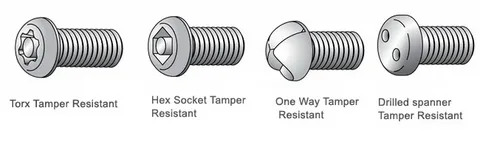
Fasteners are often the weakest point in any secured installation. Pull-out tests apply vertical and lateral force to screws, bolts, and anchors fixed into steel or concrete panels. This process measures how much tension the fasteners can withstand before slipping or breaking.
By testing under multiple load angles, prison supply manufacturers confirm whether fasteners will hold during aggressive tampering. These tests often exceed real-world conditions to ensure reliability in extreme scenarios. The information gathered drives adjustments in thread design and anchoring systems for detention center doors and frames.
Surface Abrasion Trials to Gauge Wear and Breach Potential
Surface wear testing determines how well coatings resist friction, scraping, or corrosion. Abrasion machines use rotating brushes or grit wheels to simulate years of contact with metal, cleaning products, and even human skin. This method identifies weak finishes that could flake, exposing metal underneath to rust or tampering.
These evaluations are especially vital for modular jails, where long-term maintenance access may be limited. Detention equipment contractors rely on these findings to select powder coatings and sealants that retain strength and color under constant use. Durability at the surface level often prevents larger failures over time.
Joint Integrity Checks Under Torsion and Bending Pressure
Torsion and bending tests focus on the strength of welded or bolted joints, where two structural parts meet. The testing equipment twists and bends each joint at set intervals to reveal hidden cracks or alignment failures. Weak joints can become critical security risks if not identified before installation. These evaluations often expose manufacturing inconsistencies invisible to the naked eye. Through these findings, engineers strengthen weld seams and redesign connection points to distribute stress evenly. For detention hardware, a joint that holds under torsion ensures the product’s long-term stability.
Edge-prying Simulations Using Leverage Tools
Edge-prying tests simulate forced-entry attempts using metal bars or similar leverage devices. By applying progressive force at doors, hinges, or panel edges, technicians evaluate whether materials can resist bending or separation. The key is not only how strong the metal is but how it redistributes stress during the attempt. In practice, this testing ensures that even partial deformation doesn’t result in full breach. For high-security areas, such as sally ports and cell entryways, this step ensures that panels and frames stay intact even after intense prying attempts. Security detention equipment contractors use these outcomes to refine reinforcement layering and attachment methods.
Heat Exposure Tests to Detect Weakness Under Thermal Stress
Thermal testing evaluates how materials behave under high and fluctuating temperatures. Metals and composites are heated to extreme levels, then rapidly cooled to reveal expansion cracks or coating breakdowns. This test reflects conditions such as fires or deliberate heat tampering. The data gathered helps manufacturers choose alloys that maintain shape and strength under thermal strain. Materials that warp or delaminate are disqualified for detention environments. Heat resilience is especially important for detention center doors, where prolonged heat exposure could weaken structural integrity.
Cornerstone applies these precise testing standards in its manufacturing and installation processes, ensuring that every detention product—from modular jail components to full-scale security systems—meets tamper-resistance and long-term reliability requirements.
